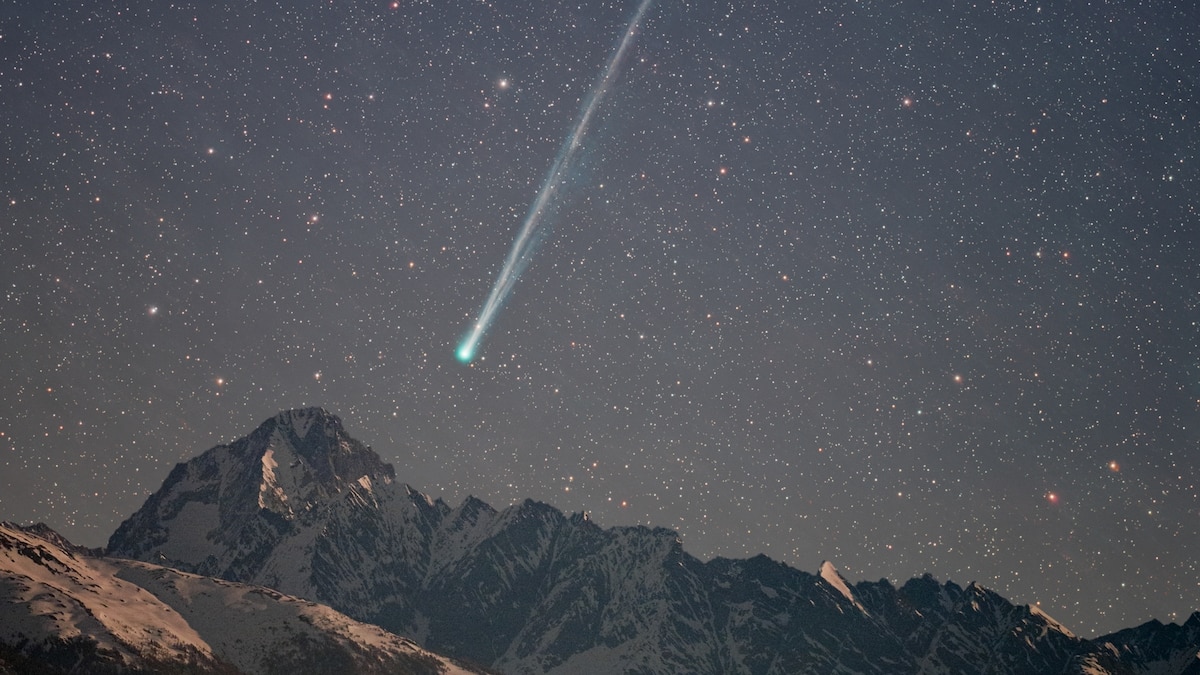
Comets Light Up the Night Sky, Capturing Public Fascination
Recent celestial events have brought comets into the spotlight, drawing the attention of stargazers and sparking renewed interest in the cosmos. The discovery and visibility of comets like PanSTARRS have created a buzz, reminding us of the dynamic and awe-inspiring nature of our solar system. These icy visitors from the outer reaches of space offer a fleeting yet profound connection to the universe's history.
What's Happening: New Comets Spotted and Observed
The current trend around comets is largely driven by the emergence of new, observable celestial bodies. News outlets are highlighting discoveries and the opportunities to witness these phenomena. Specifically, Comet PanSTARRS has been a focal point, with various sources detailing its path and visibility. Articles emphasize that while some comets are once-in-a-lifetime events, others may offer periodic returns, though often requiring powerful telescopes.
Why It Matters: A Window to the Past and Future
Comets are more than just pretty sights in the night sky; they are invaluable scientific objects. They are remnants from the formation of our solar system, approximately 4.6 billion years ago. Composed of ice, dust, and rock, they contain organic compounds that may have played a role in the origin of life on Earth. Studying comets allows scientists to understand the conditions and composition of the early solar system, providing clues about how planets, including our own, came to be. Each sighting offers a unique opportunity for data collection, from analyzing their chemical makeup to understanding their orbital mechanics.
Background Context: The Nature of Comets
Comets originate from the coldest, most distant regions of the solar system, primarily the Kuiper Belt and the Oort Cloud. They typically have highly elliptical orbits, which means they spend most of their time far from the Sun. As a comet approaches the Sun, the solar radiation causes its ices to sublimate (turn directly from solid to gas), releasing gas and dust that form a glowing coma (atmosphere) and often a spectacular tail. This tail, which can stretch for millions of kilometers, always points away from the Sun due to solar wind and radiation pressure.
The visibility of a comet depends on several factors, including its size, composition, how close it passes to Earth, and the surrounding light pollution. Some comets are only visible with powerful telescopes, while others can be seen with the naked eye under dark skies. Historically, comets have been viewed with a mixture of awe and trepidation, often interpreted as omens or portents.
"A comet is essentially a cosmic time capsule, preserving material from the dawn of our solar system."
What to Expect Next: Future Cometary Events and Research
The ongoing interest in comets suggests that public fascination with these celestial bodies remains high. Scientists continue to track and study comets, with dedicated telescopes and space missions aimed at unraveling their secrets. Future discoveries are anticipated, and space agencies are always looking for opportunities to send probes to study comets up close. For the public, resources like astronomy apps and local observatories provide guidance on when and how to best view upcoming cometary events.
The visibility of specific comets, like PanSTARRS potentially appearing again around April 2026, means that opportunities to engage with astronomy will continue. Public outreach initiatives play a crucial role in educating people about these events and fostering an appreciation for space science. As technology advances, our ability to discover and study comets will only improve, promising more exciting revelations from these ancient visitors.
Key Takeaways:
- New comets, such as PanSTARRS, are currently trending topics.
- Comets are remnants from the early solar system, offering scientific insights.
- Their visibility depends on proximity to Earth and observational conditions.
- Continued research and public interest are expected for future cometary events.