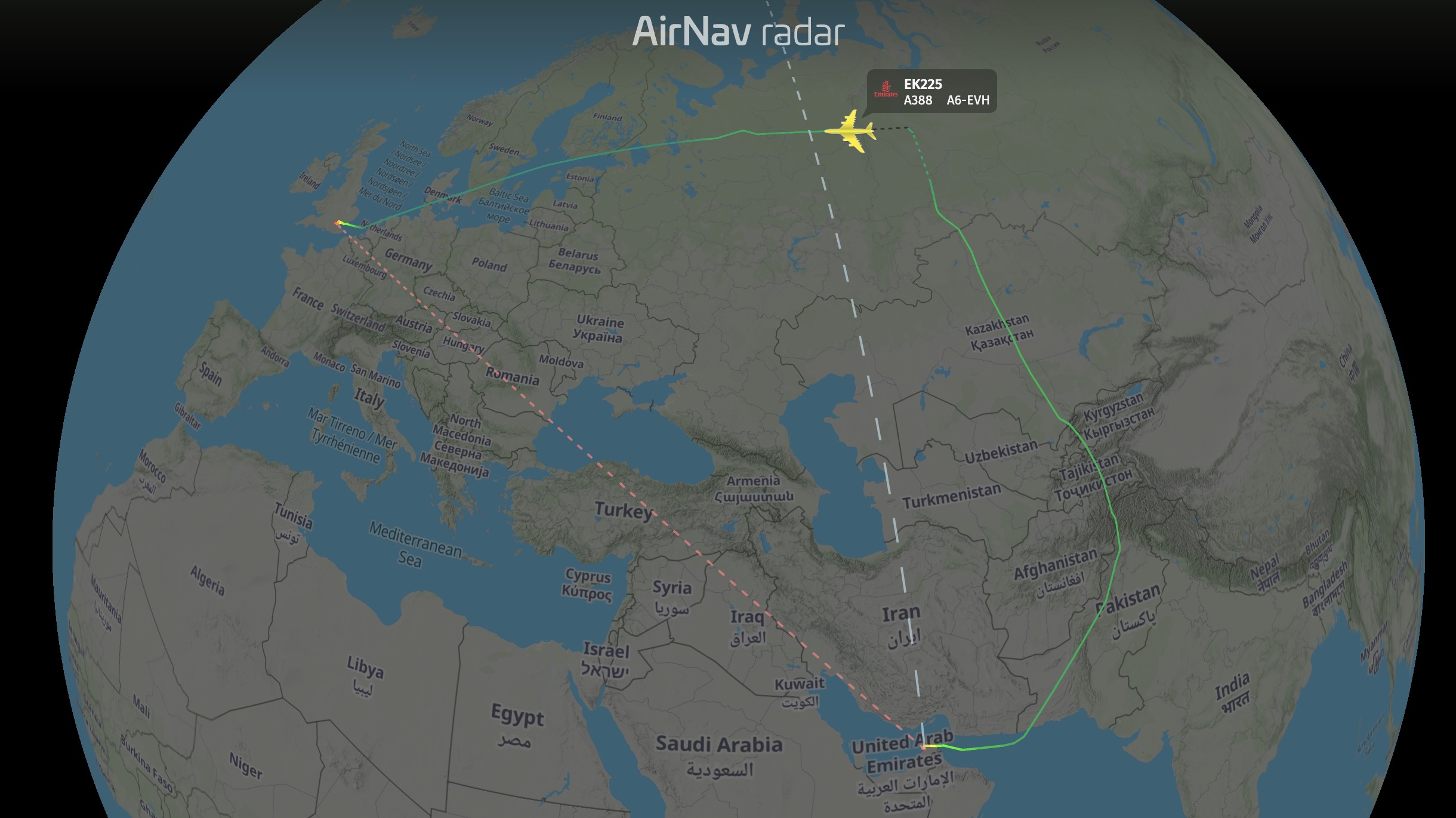
Emirates Flight EK225 Diverted Mid-Journey Due to Medical Emergency
Emirates flight EK225, a routine journey from Dubai to San Francisco aboard an Airbus A380, recently made headlines due to an unexpected and extensive diversion. The flight was rerouted to London after a medical emergency occurred onboard, requiring the aircraft to land prematurely to ensure the passenger received necessary medical attention.
What Happened on Emirates EK225?
Emirates flight EK225 departed from Dubai International Airport (DXB) with San Francisco (SFO) as its destination. The flight path, which typically takes aircraft over Northern Russia, was disrupted when a passenger experienced a severe medical emergency. In accordance with standard aviation safety procedures and medical protocols, the flight crew made the critical decision to divert to the nearest suitable airport capable of handling an A380 and providing immediate medical facilities.
The chosen diversion airport was London Heathrow (LHR), a major international hub with extensive medical infrastructure. This diversion was not a minor detour; reports indicate it involved flying over 2,000 miles out of the planned route, adding significant hours to the journey for all passengers and crew. The Airbus A380, one of the largest passenger aircraft in the world, requires specific airport capabilities for landing and servicing, making London Heathrow a practical, albeit distant, choice.
Why This Diversion Matters
The diversion of Emirates flight EK225 is significant for several reasons. Firstly, it highlights the paramount importance of passenger safety and well-being in air travel. Airlines are equipped and trained to handle a range of emergencies, and medical situations are among the most critical.
"The safety and well-being of our passengers and crew is our top priority. Our flight and cabin crew are trained to assess and respond to medical emergencies, and we work with ground support services to ensure the best possible care for our passengers."
Secondly, the sheer scale of the diversion – thousands of miles – demonstrates the complex logistical and operational challenges faced by airlines. The decision to divert is never taken lightly, as it impacts numerous stakeholders, including passengers on the diverted flight, the airline's operational schedule, and the crew. For passengers, it meant an extended travel time, potential rebooking, and significant disruption to their plans.
Furthermore, the incident draws attention to the capabilities and preparedness of modern aircraft and airports. The fact that an A380 could be rerouted and land safely at a diversion airport underscores the advanced technology and robust infrastructure supporting global aviation. The ability to manage such diversions efficiently is a testament to the sophisticated air traffic control systems and airport operations worldwide.
Background Context: Medical Emergencies in Aviation
Medical emergencies during flights are not uncommon. Factors such as the enclosed environment of an aircraft, the effects of altitude, and pre-existing medical conditions can sometimes lead to passengers requiring urgent medical attention. Airlines carry comprehensive medical kits, and many flights have passengers with medical training (doctors, nurses) who can assist.
Modern aircraft are equipped with Automated External Defibrillators (AEDs) and carry supplementary oxygen. Flight deck and cabin crew undergo recurrent training in first aid and emergency response, including managing cardiac arrest, choking, and other life-threatening conditions. In many cases, pilots can communicate with medical professionals on the ground via satellite phone or ACARS (Aircraft Communications Addressing and Reporting System) to receive guidance.
The decision to divert is typically made in consultation with the airline's operations control center and medical advisors. The primary considerations include the severity of the passenger's condition, the estimated time to reach a suitable medical facility, and the aircraft's capabilities. While diverting adds considerable cost and delay, the overriding factor is always the preservation of life and health.
What to Expect Next
Following the diversion of EK225, Emirates will likely be working to re-accommodate passengers. This may involve arranging onward travel, providing accommodation, and managing the logistical challenges associated with such an extended delay. The aircraft itself will undergo necessary checks, and operations will resume once all protocols are met.
Passengers who were on board EK225 may experience significant delays in reaching their final destination. It is advisable for affected passengers to monitor communications from Emirates regarding their rebooking and travel arrangements. The airline is expected to provide support and updates to ensure the situation is resolved with minimal further disruption.
Incidents like this serve as important case studies for the aviation industry, reinforcing the need for continuous training, robust emergency protocols, and effective communication between airlines, air traffic control, and medical services. The smooth handling of the EK225 diversion, despite the inconvenience, demonstrates the industry's commitment to safety.