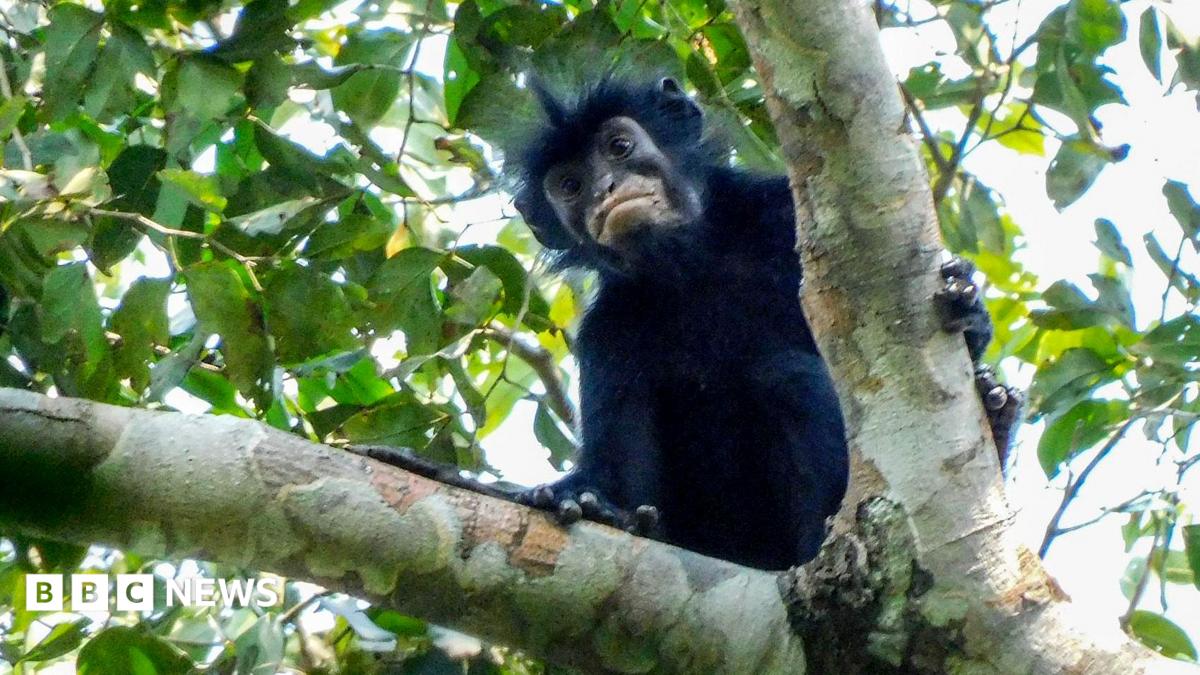
A Splash of Color in the Congo: The Newly Discovered Monkey with Orange Lips
The scientific community and nature enthusiasts are abuzz with the recent announcement of a remarkable discovery: a new species of monkey identified in the vast, verdant rainforests of the Democratic Republic of Congo. What sets this primate apart and has propelled it into trending discussions is its most striking feature – vivid, unmistakable orange lips.
What Happened: A Hidden Gem Revealed
Researchers, on an expedition deep within the Congolese wilderness, have officially described a previously unknown species of monkey. This new primate, characterized by its vibrant orange perioral area, was found inhabiting a remote region of the DRC. The discovery was made by scientists who were conducting biodiversity surveys in areas that have historically been difficult to access. The distinct coloration of its lips makes it easily distinguishable from other known monkey species in the region, leading to its immediate recognition as a unique find.
Why It Matters: Biodiversity and Conservation
The discovery of any new mammal species, especially a primate, is a significant event. It underscores the immense biodiversity that still exists on our planet, much of which remains undocumented. For the Democratic Republic of Congo, a nation rich in natural resources but facing various conservation challenges, this finding highlights the critical importance of protecting its invaluable ecosystems. It serves as a potent reminder that these forests are not just trees but are teeming with life, some of which we are only just beginning to understand. Furthermore, such discoveries can galvanize conservation efforts, drawing attention to the need to protect habitats from deforestation, mining, and other threats.
Background Context: The Riches of the Congo Basin
The Congo Basin is the second-largest rainforest in the world, a sprawling expanse of biodiversity that is home to an incredible array of plant and animal life. It is a crucial global ecosystem, playing a vital role in climate regulation. Despite its ecological significance, large parts of the basin remain underexplored due to challenging terrain, political instability, and limited resources for scientific research. Historically, numerous species have been discovered within this region, but the process is often slow and arduous. The discovery of this monkey with orange lips is a testament to the persistent efforts of scientists and the biological richness that the Congo Basin continues to hold.
What to Expect Next: Further Research and Protection
With the formal identification of this new species, the next steps involve intensive study. Scientists will aim to understand its exact taxonomic classification, its ecological role, diet, social structure, and population size. Understanding its distribution within the DRC is also crucial for developing effective conservation strategies. The hope is that this discovery will lead to increased support for conservation initiatives in the region, ensuring the long-term survival of this unique monkey and its habitat. The international scientific community will be watching closely as more information emerges about this fascinating primate.
"The discovery of new species is a vital part of understanding our planet's biodiversity and the urgent need for conservation."
The striking visual of a monkey with bright orange lips is not just a curiosity; it's a symbol of the wild's enduring capacity for surprise and the critical need to safeguard these precious natural environments before more species vanish, unknown.
Key Takeaways:
- A new species of monkey with distinctive orange lips has been discovered in the Democratic Republic of Congo.
- This finding highlights the significant, underexplored biodiversity within the Congo Basin.
- The discovery emphasizes the importance of conservation efforts in the region.
- Further research is planned to understand the species' behavior, habitat, and population.