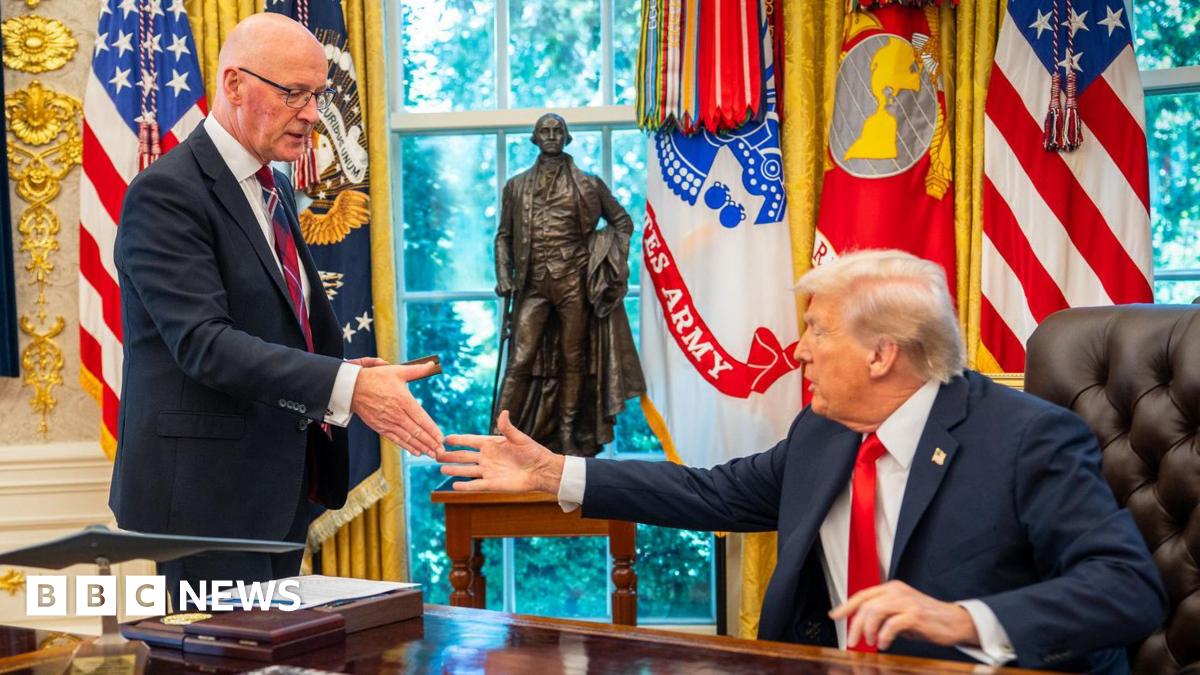
John Swinney Declines White House Invitation, Sparking Discussion
Reports have emerged that John Swinney, the current First Minister of Scotland, has declined an invitation to attend a state banquet at the White House. This news has quickly become a trending topic, prompting questions about the reasons behind the decision and its broader implications.
What Happened?
According to various news outlets, John Swinney was invited to a White House state banquet, an event typically reserved for high-ranking dignitaries and allies. However, Swinney has reportedly chosen not to accept the invitation. The details surrounding the decline are sparse, but some reports suggest the invitation was extended by Donald Trump. The brevity of the reported communication, with one outlet mentioning a "4-minute call," has also drawn attention.
The guest list for such a prestigious event often includes heads of state, royalty, and influential figures from around the world. The fact that a prominent political leader like the First Minister of Scotland would decline such an invitation is noteworthy and has led to considerable discussion among political observers and the public.
Why Does This Matter?
State banquets at the White House are significant diplomatic events, symbolizing strong bilateral relationships and international cooperation. An invitation to such an event is considered a mark of high regard. Therefore, a decline from a leader of a nation like Scotland, even if part of the United Kingdom, is unusual and can be interpreted in several ways.
The context of the invitation, reportedly extended by Donald Trump, adds another dimension. Swinney's decision could be interpreted through the lens of current political dynamics, his party's stance, or Scotland's specific relationship with the US administration. It raises questions about diplomatic protocol and the political calculations involved in accepting or declining such high-profile invitations.
Background Context
John Swinney assumed the role of First Minister of Scotland in May 2024, succeeding Humza Yousaf. His tenure began amidst ongoing political developments both within Scotland and on the international stage. Scotland, as part of the United Kingdom, maintains its own distinct international engagement, particularly in areas like culture and education, while foreign policy is primarily directed by the UK government.
State visits and banquets are meticulously planned diplomatic exercises. Historically, invitations to these events are extended based on established diplomatic ties and the perceived importance of the relationship between the host nation and the invitee's country. The involvement of Donald Trump in extending this particular invitation might suggest a specific focus or outreach from his administration.
The political landscape in which this invitation was extended is also crucial. International relations can be complex, with leaders often navigating a delicate balance of domestic priorities and global engagement. Decisions regarding participation in international events can be influenced by a myriad of factors, including policy alignment, domestic political considerations, and the perceived benefits or drawbacks of association.
What to Expect Next
It is unlikely that the Scottish government will provide extensive details regarding the specific reasons for Swinney's declination, as such matters often involve sensitive diplomatic considerations. However, the trending nature of this topic may lead to further speculation and analysis in the media.
Political commentators may dissect the decision, exploring potential underlying political messages or strategic calculations. The event itself will proceed, and the attendance of other international dignitaries will be closely watched. For now, the story remains focused on Swinney's reported refusal and the discussions it has ignited about diplomatic engagements and political symbolism.
"A state banquet is one of the highest forms of diplomatic engagement. Declining such an invitation, especially when it involves significant figures, is rarely a decision taken lightly."
The implications for Scotland's international standing, or its relationship with the US, are likely to be minimal in the short term, given that Swinney's declination is a single event within a broader framework of diplomatic ties. However, it serves as a talking point and highlights the intricate nature of modern international relations.