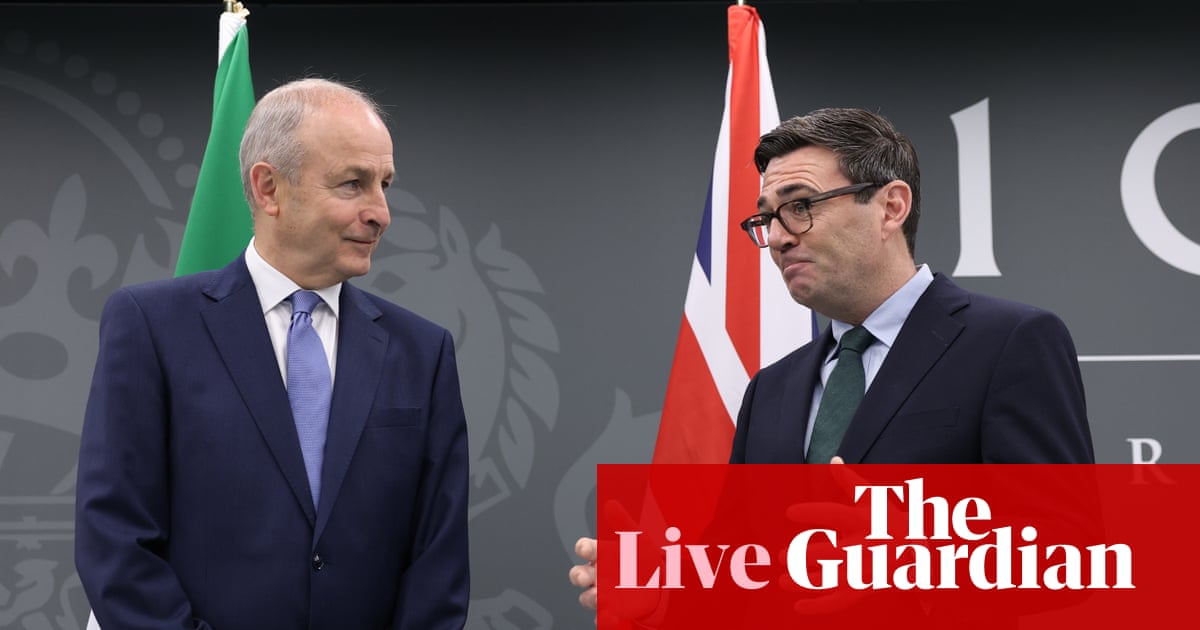
Irish Taoiseach Engages in Key Diplomatic Discussions with UK Officials
The term 'Taoiseach,' the Irish title for the head of government, has surged in trending discussions due to recent high-profile meetings between Ireland's leader and senior UK political figures. These engagements underscore the dynamic and evolving relationship between Ireland and the United Kingdom, particularly concerning matters of mutual interest such as regional stability, economic cooperation, and international policy alignment.
What Happened?
Recent news reports indicate that Ireland's Taoiseach has been actively involved in diplomatic discussions with key figures in the UK. Notably, the Taoiseach hosted Andy Burnham, Mayor of Greater Manchester, in discussions that touched upon Ireland's position regarding the EU's 'Made in Europe' plan. The Taoiseach is reportedly seeking exemptions for the UK from this initiative, highlighting a complex interplay of economic interests and international trade policies. Furthermore, reports confirm meetings between the Irish Taoiseach and the UK Prime Minister, with a primary focus on the imperative to 'progress' the Good Friday Agreement. This reiterates the commitment to upholding and advancing the peace process and its associated principles.
Why Does This Matter?
These diplomatic exchanges are significant for several reasons. Firstly, they highlight the critical importance of the Good Friday Agreement, a foundational peace accord for Northern Ireland. Any discussion or action related to its progress has profound implications for political stability, community relations, and the future of the island of Ireland. The Taoiseach's direct engagement with the UK Prime Minister on this matter signifies Ireland's unwavering commitment to its protection and advancement.
Secondly, the discussions surrounding the 'Made in Europe' plan and potential UK exemptions reveal the ongoing economic ramifications of Brexit and the UK's redefined relationship with the European Union. Ireland, as an EU member state with close economic ties to the UK, has a vested interest in navigating these trade complexities. The Taoiseach's advocacy for potential UK exemptions suggests a nuanced approach to managing these economic relationships, possibly seeking to mitigate negative impacts or foster specific collaborative opportunities.
"We have a duty to 'progress' Good Friday Agreement, taoiseach tells PM." - BBC News
Background Context
The role of the Taoiseach is central to Irish governance. The incumbent leads the government of Ireland, serving as chief executive and head of government. This office is typically held by the leader of the political party or coalition commanding a majority in Dáil Éireann, the lower house of the Irish Parliament.
The Good Friday Agreement, signed in 1998, is a landmark peace treaty that aimed to end the decades of conflict known as 'The Troubles' in Northern Ireland. It established a power-sharing government in Northern Ireland and significantly improved relations between Ireland and the United Kingdom. Its principles and institutions remain vital for peace and stability in the region.
The 'Made in Europe' plan is an initiative by the European Union aimed at strengthening the continent's industrial base. Such plans often involve regulations, standards, and support mechanisms designed to boost European manufacturing and innovation. For non-EU countries like the UK, navigating these EU initiatives post-Brexit involves complex negotiations to align trade, regulatory, and industrial policies.
What to Expect Next
Following these high-level meetings, we can anticipate continued diplomatic dialogue between Ireland and the UK. The outcomes of these discussions will likely shape future policy decisions on both sides of the Irish Sea. Further statements from government officials regarding progress on the Good Friday Agreement are expected, reinforcing the ongoing commitment to peace and stability. Similarly, developments concerning the 'Made in Europe' plan will be closely watched to understand the evolving economic and trade landscape between the UK and the EU, with Ireland playing a pivotal role in these conversations.
It is also probable that public and political discourse will remain focused on these key issues, reflecting their importance to national interests and international relations. The Taoiseach's active participation in such significant diplomatic efforts ensures that Ireland remains a key player in addressing critical challenges and opportunities within the European and broader international spheres.