World Space Week 2026: Iran's Advancements Signal a New Era
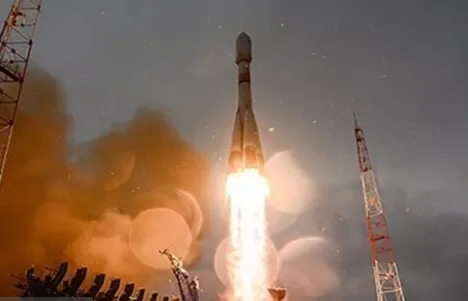
As anticipation builds for World Space Week 2026, global attention is increasingly turning towards the ambitious strides being made by nations like Iran in space exploration. Recent developments and future plans from Iran's space program are not only capturing headlines but also underscoring the evolving landscape of international space endeavors. The "Rocket Revolution," a key theme often associated with World Space Week, finds a prominent example in Iran's determined pursuit of advanced satellite technology.
What's Happening: Iran's Satellite Push
The immediate catalyst for the current interest in World Space Week 2026 stems from Iran's recent announcements regarding its space program. Key among these is the revelation that the nation has a new satellite prepared for launch. This signifies a tangible step forward in its ongoing efforts to expand its presence and capabilities beyond Earth's atmosphere. The readiness of a new satellite indicates a consistent investment and development cycle within Iran's space agency.
Beyond single satellite launches, Iran is also articulating a more expansive vision for its space assets. There are concrete plans underway to develop satellite constellations. These constellations, composed of multiple satellites working in tandem, are designed to provide continuous coverage and enhance data collection capabilities. A critical aspect of this plan is the pursuit of one-meter imaging resolution, a significant technological benchmark that would allow for highly detailed Earth observation.
Why It Matters: The Shifting Space Paradigm
The advancements announced by Iran are significant for several reasons. Firstly, they highlight the growing capabilities of emerging spacefaring nations. As global access to space technology expands, the competitive landscape transforms, bringing new players with distinct objectives and technological approaches to the forefront.
Secondly, the focus on satellite constellations and high-resolution imaging has profound implications. Such capabilities are crucial for a wide array of applications, including:
- Environmental Monitoring: Tracking climate change, deforestation, and natural disasters with greater precision.
- Resource Management: Identifying and managing agricultural land, water resources, and mineral deposits.
- Urban Planning: Monitoring city growth and infrastructure development.
- National Security: Enhancing surveillance and reconnaissance capabilities.
The pursuit of one-meter resolution places Iran among a cohort of nations capable of such detailed Earth observation, raising its profile in the global intelligence and data-gathering community.
Background Context: Iran's Space Aspirations
Iran's space program has been a subject of international interest for years. The country has successfully launched several satellites, including the Omid (Hope) satellite, its first indigenous satellite, in 2009. Subsequent launches have included the Rasad-1 (Observation-1) and Fajr (Dawn) satellites. These achievements, while significant, have often been met with scrutiny due to concerns about potential dual-use technologies and Iran's broader geopolitical ambitions.
The "Rocket Revolution" theme is particularly relevant in this context. It refers to the broader global trend of increased launch capabilities, reduced costs, and the proliferation of satellite technology. This revolution is not solely driven by established space agencies but also by a growing number of private companies and national programs seeking to leverage space for economic and strategic advantage. Iran's program can be seen as a national effort contributing to this global shift, aiming to secure strategic autonomy and technological advancement in a critical domain.
"The development of satellite constellations with one-meter imaging resolution represents a significant leap for Iran's space capabilities, enabling more precise and comprehensive Earth observation." - WANA News Agency
What to Expect Next: Looking Towards 2026 and Beyond
With a new satellite reportedly ready for launch and ambitious plans for constellations, the coming years leading up to World Space Week 2026 are likely to be dynamic for Iran's space program. Observers will be watching closely for the timing and success of the upcoming launch, as well as further details on the development and deployment of their satellite constellation project.
The global space community will undoubtedly be analyzing the implications of these advancements. How Iran integrates its new capabilities into existing frameworks for data sharing, scientific research, and international cooperation will be of keen interest. World Space Week 2026, therefore, promises to be a significant juncture for discussing not only global space trends but also the specific contributions and challenges posed by rising space powers.
The ongoing "Rocket Revolution" is characterized by innovation and competition. Iran's recent activities suggest it aims to be a significant player in this revolution, leveraging its technological advancements to achieve national objectives and contribute to the global understanding of our planet and the cosmos. The world will be watching to see how these plans unfold, especially as they align with the broader themes celebrated during World Space Week.