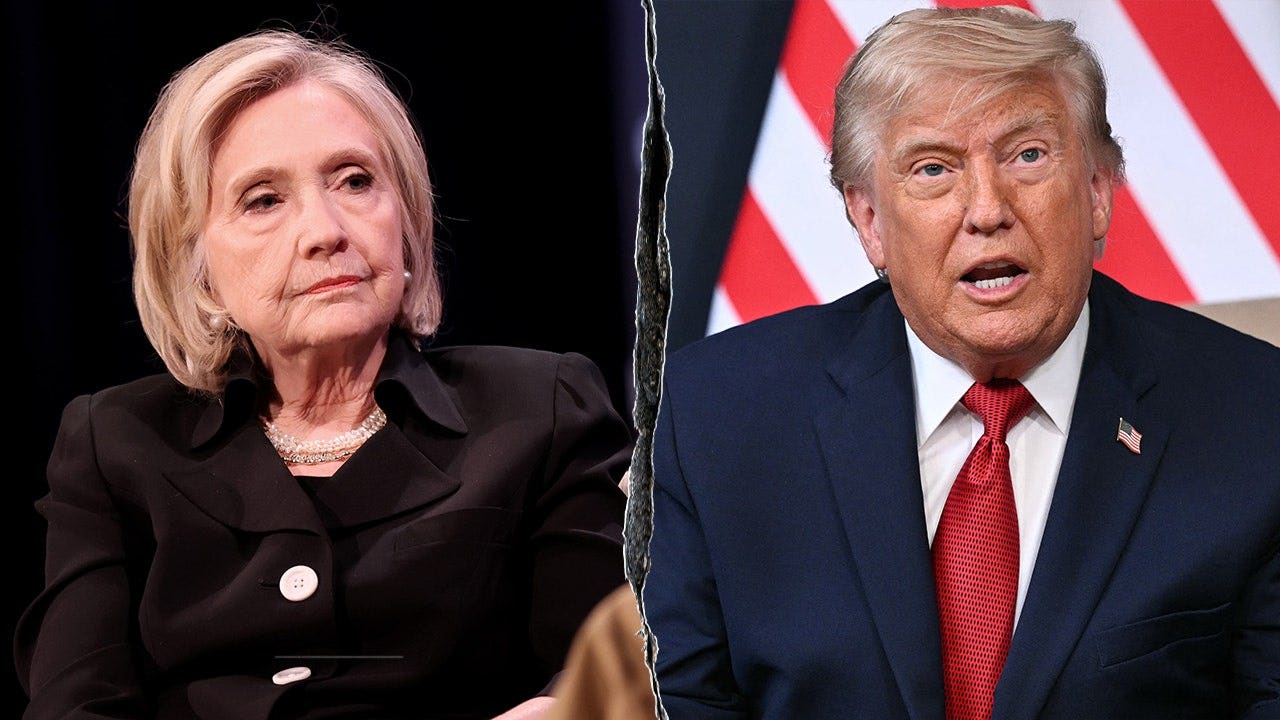
Hillary Clinton's Unexpected Endorsement of Trump's Gaza Plan Sparks Political Debate
What Happened?
Former Secretary of State and presidential candidate Hillary Clinton has recently gained significant attention for her public statements regarding the Israeli-Palestinian conflict, specifically concerning Gaza. In a move that has surprised many political observers, Clinton offered a rare instance of praise for former President Donald Trump, endorsing his proposed peace plan for Gaza. She reportedly described the plan as the "only game in town," suggesting a belief in its potential viability as a pathway to resolution amidst the ongoing conflict.
This endorsement comes from a prominent figure within the Democratic Party, a party that has often been critical of Trump's foreign policy initiatives and his approach to the Middle East. News outlets such as Fox News, Yahoo, and Sky News Australia have highlighted this development, framing it as a significant moment of cross-party alignment on a highly contentious issue.
Why It Matters
Hillary Clinton's endorsement of Donald Trump's Gaza plan is significant for several reasons. Firstly, it represents a potential crack in the united front of Democratic opposition to Trump's foreign policy. While individual politicians may hold nuanced views, a public statement of support for a Trump initiative, especially on a matter as sensitive as the Middle East peace process, is noteworthy. It could embolden other Democrats to consider pragmatic approaches that transcend partisan lines, or conversely, it could face backlash from within her own party.
Secondly, it underscores the complex and challenging nature of finding a lasting solution to the Israeli-Palestinian conflict. Clinton, with her extensive experience in diplomacy, including her role as Secretary of State, brings a level of gravitas to her assessment. Her view that Trump's plan, despite its origins, might be the most practical option available suggests a potential reassessment of established diplomatic strategies. The trending status of her name indicates that the public and political circles are closely watching these developments and considering the implications of such a high-profile endorsement.
Background Context
The Israeli-Palestinian conflict is one of the world's most enduring and complex geopolitical disputes. It involves territorial claims, security concerns, and deeply rooted historical grievances between Israelis and Palestinians. Numerous peace initiatives, from the Oslo Accords to various US-led efforts, have attempted to broker a lasting peace but have ultimately fallen short of achieving a comprehensive resolution.
Donald Trump, during his presidency, pursued a distinct approach to Middle East policy. This included moving the U.S. embassy to Jerusalem, brokering normalization agreements between Israel and several Arab nations (the Abraham Accords), and proposing his own peace plan. While the Abraham Accords were widely praised by some as a diplomatic breakthrough, Trump's peace plan itself was met with mixed reactions, including skepticism from Palestinian leadership and varied responses from the international community. It proposed a two-state solution with significant modifications to previous proposals, including the establishment of a Palestinian state within specific borders and security arrangements.
Hillary Clinton, on the other hand, has a long history in American foreign policy, serving as First Lady, U.S. Senator from New York, and Secretary of State under President Barack Obama. Her diplomatic career involved extensive engagement with Middle Eastern issues. Generally, Democrats have viewed Trump's policies in the region with criticism, often emphasizing traditional diplomatic frameworks and the need for Palestinian statehood. Clinton's recent comments therefore represent a deviation from this general stance, prompting questions about her specific reasoning and the broader implications for Democratic foreign policy thinking.
What to Expect Next
The unfolding situation surrounding Hillary Clinton's comments is likely to generate further discussion and analysis. We can expect:
- Deeper Scrutiny of the Plan: Clinton's endorsement may lead to renewed attention and debate over the specifics of Trump's Gaza peace plan, with analysts and policymakers examining its feasibility and potential consequences more closely.
- Internal Democratic Reactions: It will be interesting to observe how other prominent Democrats react to Clinton's statement. Some may agree with her pragmatic assessment, while others might publicly disagree, potentially highlighting internal divisions within the party on foreign policy matters.
- Analysis of Motivations: Pundits and journalists will likely delve deeper into Clinton's motivations for supporting Trump's plan at this particular juncture. Factors such as the urgency of the humanitarian situation in Gaza, perceived failures of previous approaches, or a desire to influence future policy discussions might be explored.
- Impact on Future Negotiations: While Trump's plan is currently a proposal, any endorsement from a figure like Clinton could influence its consideration in future diplomatic efforts, particularly if Trump were to seek the presidency again or if similar approaches were to be discussed in international forums.
Hillary Clinton's pragmatic assessment, even if surprising, highlights the ongoing search for effective solutions in a region plagued by persistent conflict. Her statement prompts a valuable discussion about whether established partisan divides should always dictate foreign policy approaches.
The situation serves as a reminder that foreign policy challenges often require complex, nuanced thinking that can sometimes transcend traditional political boundaries. The trending status of Hillary Clinton's name reflects the public's engagement with these critical issues and their willingness to consider different perspectives, even those that challenge conventional wisdom.