Mars: A New Frontier of Discovery with Unprecedented Organic Molecule Findings
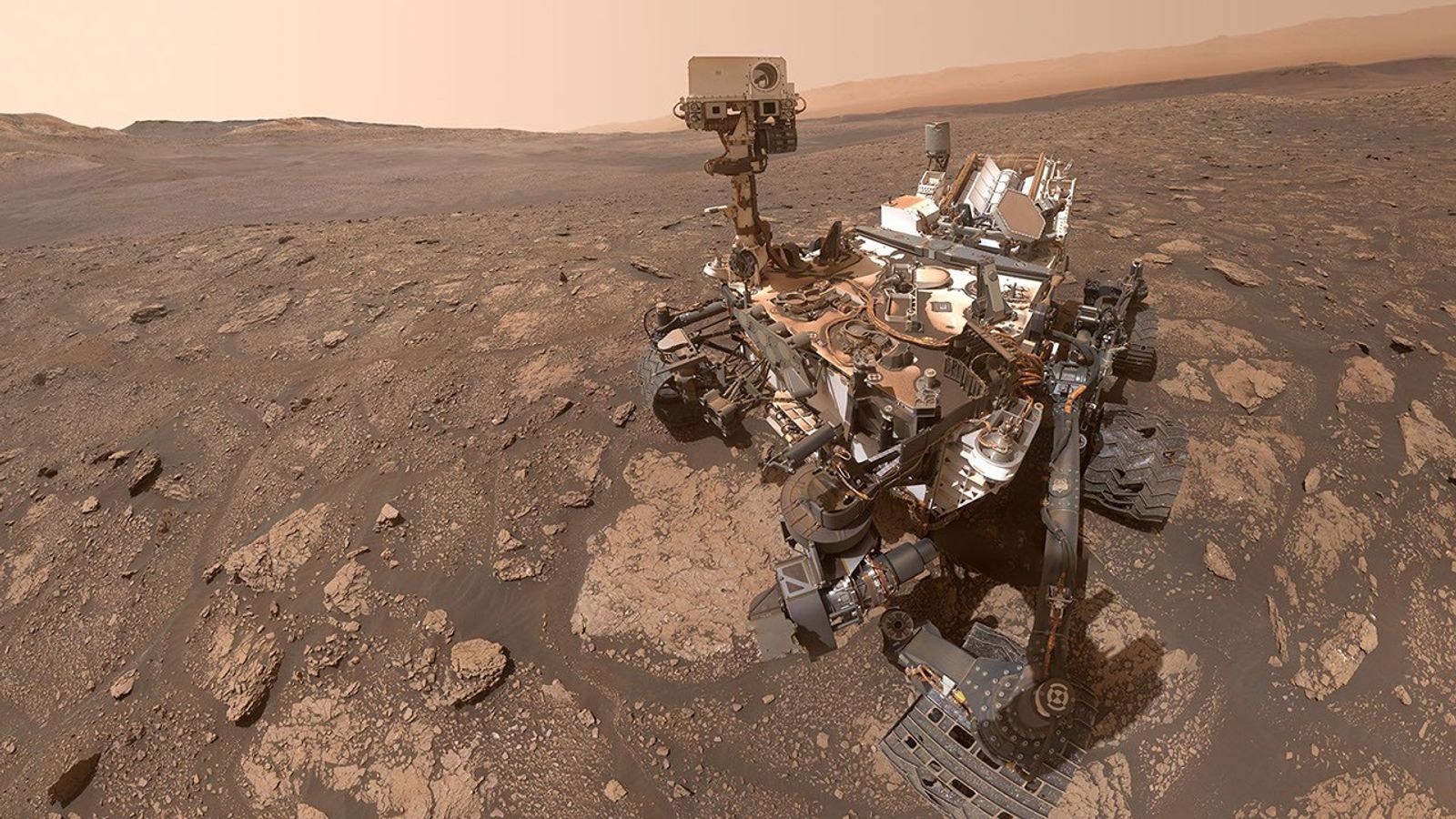
The relentless exploration of Mars continues to yield astonishing results, with the latest news centering on a remarkable discovery by NASA's veteran Curiosity rover. This mission, a cornerstone of our efforts to understand the Red Planet, has identified organic molecules on Mars that are entirely new to scientists. This development is not just another incremental finding; it represents a significant leap in our quest to determine if life ever existed, or perhaps still exists, on our planetary neighbor.
What Happened: A Novel Organic Discovery
NASA's Curiosity rover, which has been diligently exploring Gale Crater since 2012, has detected a suite of organic molecules that were not previously identified on the Martian surface. Organic molecules are carbon-based compounds that are essential for life as we understand it. While previous missions and Curiosity itself have found organic molecules on Mars, this latest discovery involves compounds that are novel, adding a new layer of complexity to our understanding of Martian geochemistry.
The specifics of these newly found molecules are still under detailed analysis, but their presence suggests that complex chemical processes have been, or are currently, occurring on Mars. Scientists are cautious, emphasizing that organic molecules can be created through non-biological processes as well. However, their detection, especially in new forms, significantly bolsters the case for Mars's past habitability and the potential for life.
Why It Matters: The Search for Extraterrestrial Life
The discovery of novel organic molecules on Mars is intrinsically linked to the age-old question: are we alone in the universe? Organic molecules are the fundamental building blocks of life. Their presence, particularly if they are complex and diverse, can be interpreted as evidence that the conditions necessary for life's emergence may have existed on Mars.
"Is it life? We can’t tell": This quote from The Guardian aptly summarizes the current scientific stance. While the discovery is thrilling, it requires further investigation to determine the origin of these molecules.
Understanding the source of these organic molecules – whether geological or potentially biological – is paramount. If they are indeed linked to ancient microbial life, it would be one of the most profound scientific discoveries in human history. Even if they are purely geological in origin, their discovery provides invaluable insights into the complex chemical evolution of Mars, informing our understanding of planetary formation and the potential for life to arise elsewhere in the cosmos.
Background Context: Mars Exploration and Organic Discoveries
The exploration of Mars has long been driven by the search for signs of life. Early missions focused on identifying water, a key ingredient for life. Subsequent missions, including the Mars Science Laboratory with the Curiosity rover, have shifted focus to searching for organic compounds and assessing habitability.
Curiosity's previous findings of organic molecules, such as thiophenes and benzene, have already established that organic chemistry is active on Mars. However, these new discoveries represent a departure, potentially indicating more sophisticated prebiotic chemistry or even biological processes that have yet to be fully understood. The rover's instruments, like the Sample Analysis at Mars (SAM) suite, are equipped to detect and analyze these complex molecules, providing the data necessary for these groundbreaking announcements.
The search for life on Mars is not limited to Curiosity. NASA's Perseverance rover, currently exploring Jezero Crater, is also collecting samples that are planned to be returned to Earth for more in-depth analysis. The synergy between these ongoing missions enhances the likelihood of future definitive answers.
What to Expect Next: Further Analysis and Future Missions
The immediate next steps involve rigorous scientific analysis of the newly discovered organic molecules. Scientists will work to characterize their structure, distribution, and isotopic composition. This detailed examination will help them differentiate between potential biological and non-biological sources.
The findings will undoubtedly influence the design and objectives of future Mars missions. There may be a push to specifically target areas where these novel organic molecules are found for more intensive study. Furthermore, the planned Mars Sample Return mission, which aims to bring samples collected by Perseverance back to Earth, becomes even more critical.
The ongoing exploration of Mars continues to push the boundaries of our knowledge. This latest discovery by the Curiosity rover is a testament to the enduring mysteries of the Red Planet and the relentless human drive to explore the unknown. While definitive proof of life remains elusive, each new finding brings us closer to answering humanity's most profound questions.