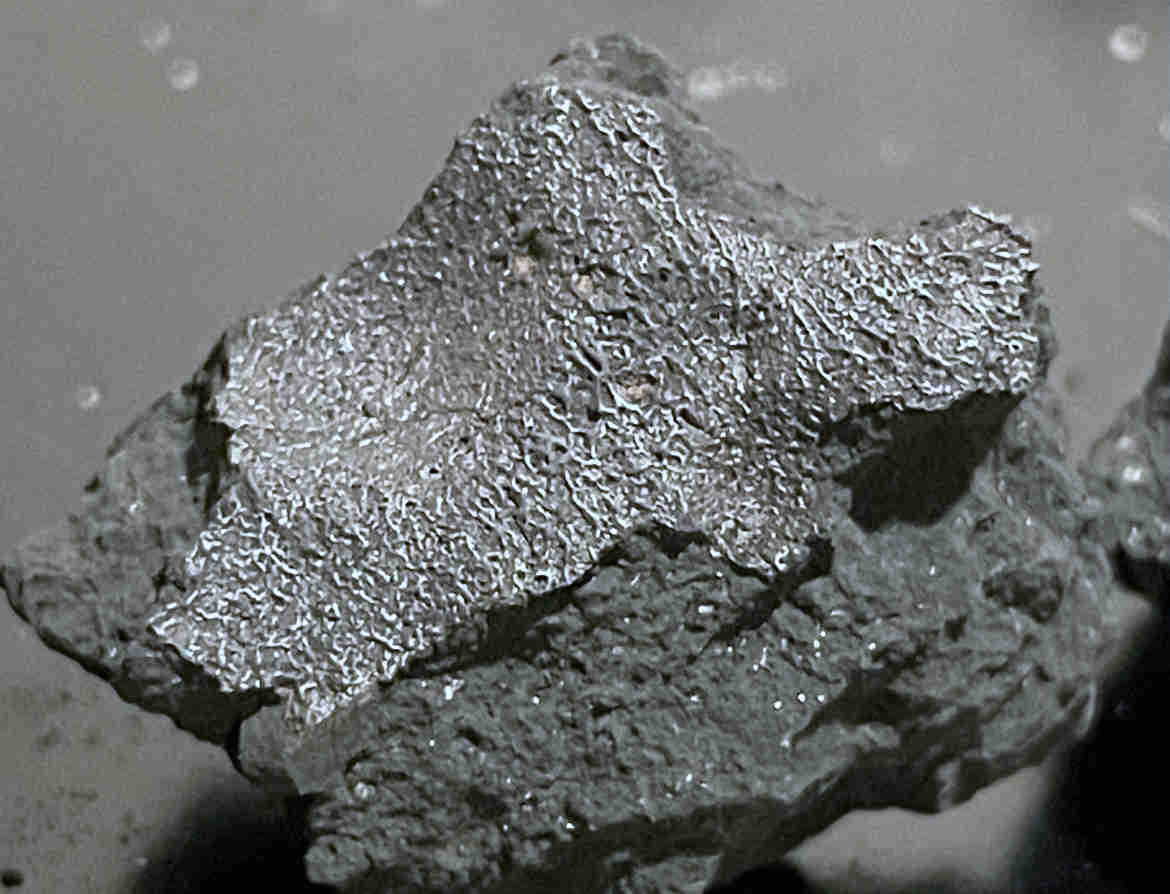
New Jersey Meteorite Reveals Complex Organic Molecules: A Glimpse into Extraterrestrial Chemistry
A meteorite that recently made an unexpected landing in a New Jersey backyard has become a focal point of scientific fascination and public curiosity. The reason for this surge in interest? The rock is teeming with complex organic molecules, sparking discussions about the origins of life and the potential for extraterrestrial chemistry. This discovery is not just a local news story; it's a significant event in the scientific community, offering tangible clues about the universe's capacity to create the fundamental ingredients for life.
What Happened: A Meteorite in the Backyard
In a turn of events straight out of a science fiction novel, a meteorite crashed through the roof of a New Jersey home, landing in its owner's backyard. While the event itself was a dramatic and unexpected occurrence, the scientific significance became apparent shortly after. Initial examinations of the meteorite have revealed a rich abundance of organic molecules. These are not simple compounds but include a variety of complex carbon-based structures, which are essential precursors for life as we know it.
"The chemistry found within this meteorite is akin to alien world chemistry," scientists have stated, emphasizing the extraterrestrial origin and complexity of the organic compounds detected.
The implications are profound. Organic molecules are the foundation upon which life on Earth is built. Finding them in such quantities and complexity within a space rock that has traveled from the far reaches of our solar system suggests that these vital ingredients are not unique to our planet. They may be widespread throughout the cosmos, seeded by celestial bodies like this New Jersey meteorite.
Why It Matters: The Building Blocks of Life
The presence of organic molecules in meteorites has long been a subject of scientific study. However, the specific composition and complexity found in this New Jersey specimen make it particularly noteworthy. These molecules are formed through non-biological processes in space, demonstrating that the chemical pathways to creating life's components can occur independently of a living planet.
This discovery is crucial for several reasons:
- Understanding Life's Origins: Studying these extraterrestrial organic molecules helps scientists reconstruct the conditions and chemical reactions that may have led to the emergence of life on early Earth. It provides a real-world sample of prebiotic chemistry.
- The Search for Extraterrestrial Life: If meteorites can deliver complex organic molecules to planets, it increases the probability that life could arise on other worlds with similar conditions. This New Jersey meteorite acts as a tangible example of this delivery mechanism.
- Astrobiology Research: The analysis of such samples is a cornerstone of astrobiology, the field dedicated to studying the origin, evolution, and distribution of life in the universe. The SETI Institute, known for its search for extraterrestrial intelligence, is also keenly interested in the chemical and biological precursors of life.
Background Context: Meteorites and Organic Matter
Meteorites have been delivering organic compounds to Earth for billions of years. Early Earth likely received a significant portion of its organic inventory from comets and asteroids. Scientists have previously identified amino acids – the building blocks of proteins – and nucleobases – components of DNA and RNA – in various meteorites. The 'Murchison' meteorite, which fell in Australia in 1969, is a famous example, containing over 90 different amino acids.
What sets this New Jersey meteorite apart is the *in situ* discovery within a recently fallen, well-preserved sample, allowing for potentially less terrestrial contamination and a clearer picture of its original composition. The fact that it landed in a residential area also makes it more accessible for immediate scientific investigation.
What to Expect Next: Ongoing Analysis
The scientific community is buzzing with anticipation as further analyses of the New Jersey meteorite are conducted. Researchers will be looking to:
- Identify Specific Molecules: Detailed spectroscopic and chemical analyses will aim to catalog the full spectrum of organic molecules present.
- Determine Isotopic Ratios: Analyzing the ratios of different isotopes within the molecules can provide clues about their formation location and processes in space.
- Assess Potential for Life: While the molecules are building blocks, they are not evidence of life itself. However, their complexity and abundance will inform models about the likelihood of life's emergence.
The ongoing study of this remarkable space rock promises to yield valuable insights into the cosmic origins of the chemical ingredients that underpin life. It serves as a powerful reminder that the universe is not only vast and mysterious but also potentially fertile ground for the processes that lead to existence.