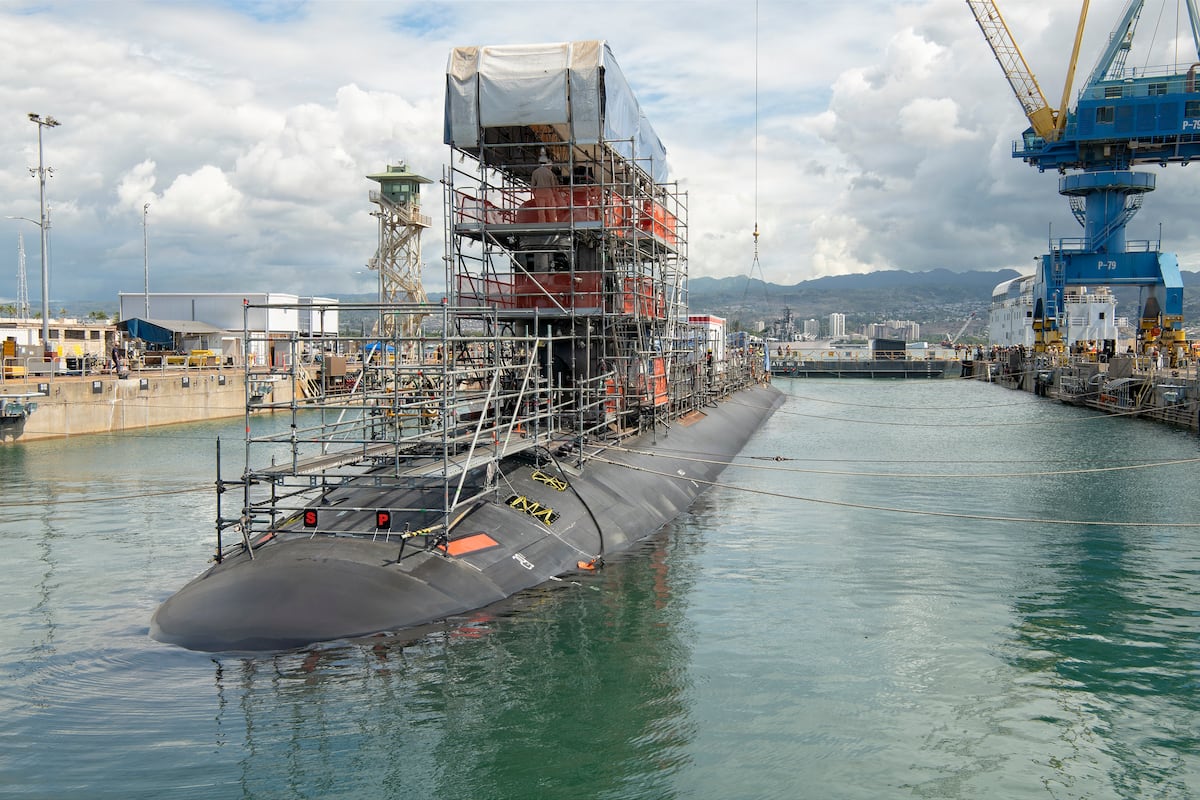
Naval Powerhouse: Massive Contracts Awarded for Advanced Submarine Fleets
The United States Navy is embarking on a significant expansion of its submarine capabilities, with recent announcements revealing monumental contract awards totaling approximately $76.6 billion. These historic investments are earmarked for the production of both the highly capable Virginia-class attack submarines and the next-generation Columbia-class ballistic missile submarines. The sheer magnitude of these contracts signifies a pivotal moment in modern shipbuilding history, with Electric Boat, a subsidiary of General Dynamics, reportedly landing the largest shipbuilding contract in modern times.
What Happened: Historic Naval Investment
In a series of significant developments, the U.S. Department of War has finalized substantial contracts that will shape the future of the American submarine force. The core of these awards centers on the continued production of the Virginia-class attack submarines, a crucial component of the Navy's current operational fleet. Simultaneously, significant funding has been allocated to accelerate the development and construction of the Columbia-class submarines. These new vessels are designed to replace the aging Ohio-class submarines and will form the backbone of the nation's strategic nuclear deterrent for decades to come.
The Department of War's official contracts database, specifically referencing actions around July 29, 2026, provides a formal confirmation of these large-scale commitments. Reports from defense news outlets like Defense News and local reporting from WFSB highlight the immense financial scale, with figures approaching $76.6 billion. The contract awarded to Electric Boat is being described as the largest shipbuilding contract in modern history, a testament to the ambitious undertaking involved in modernizing and expanding the submarine fleet.
Why It Matters: Strategic Significance and Future Deterrence
The trending news surrounding these submarine contracts is not merely about financial transactions; it speaks volumes about strategic priorities and national security. The Virginia-class submarines are renowned for their advanced stealth capabilities, multi-mission flexibility, and technological sophistication, playing a vital role in intelligence gathering, special operations, and power projection.
The Columbia-class submarines represent a leap forward in submarine technology. They are designed to be quieter, more survivable, and more effective than their predecessors, carrying the United States' strategic nuclear deterrent. This modernization effort is critical for maintaining a credible and secure second-strike capability, a cornerstone of global deterrence strategy. The substantial investment ensures that the U.S. maintains its technological edge in undersea warfare, a domain increasingly vital in a complex geopolitical climate.
Background Context: Evolution of Submarine Warfare
Submarines have been an integral part of naval strategy since the early 20th century. Initially developed as offensive weapons, their role has evolved dramatically. World War I saw the German U-boats pose a significant threat to Allied supply lines. World War II further cemented the submarine's importance, with both Allied and Axis powers relying heavily on these vessels for reconnaissance, attack, and blockade.
The Cold War era ushered in the nuclear-powered submarine, revolutionizing undersea warfare. Nuclear propulsion allowed submarines to remain submerged for months at a time, operating at greater speeds and depths. This period also saw the development of ballistic missile submarines (SSBNs), which became a key component of nuclear deterrence strategies for the US and the Soviet Union. The current generation of submarines, like the Virginia and Columbia classes, builds upon this legacy, integrating advanced sonar, stealth technology, and sophisticated weapon systems to meet the challenges of the 21st-century battlefield.
What to Expect Next: Delivery and Technological Advancements
With these massive contracts in place, the focus now shifts to the meticulous process of construction and delivery. The Virginia-class program will see continued production, ensuring a steady supply of these vital attack submarines to the fleet. The Columbia-class program, being the more complex and forward-looking initiative, will involve significant engineering and manufacturing efforts.
The successful execution of these contracts will depend on the shipbuilding industry's capacity, skilled labor availability, and the continued innovation in materials science and digital engineering. We can expect ongoing updates on construction milestones, technological breakthroughs, and potential challenges in the complex process of building these advanced underwater platforms. The future of U.S. naval power is being forged deep beneath the waves, driven by this historic commitment to its submarine force.